
Q:What’s art format do we use?
A:AI format is most convenient to us, but we can work on most other formats as long as artwork is high resolution.
Q:Do we offer a standard price sheet?
A:No, we do not offer a standard price list. There are many components that go into pricing: Size of package, order quantity, number of colors to be printed,
thickness of raw material and structure and packing requirements.
For price details, please contact our Sales Team at via phone & Whatsapp :86-180-2650-3913 or email [email protected]
Q:What’s the lead time for production?
A:Usually 30-35 days after sample approval and receipt of Purchase Order and deposit 30% money,
the 70% balance will paid before shipping. April, Junly, September is our peak season; lead time may be longer than 35 days during this period.
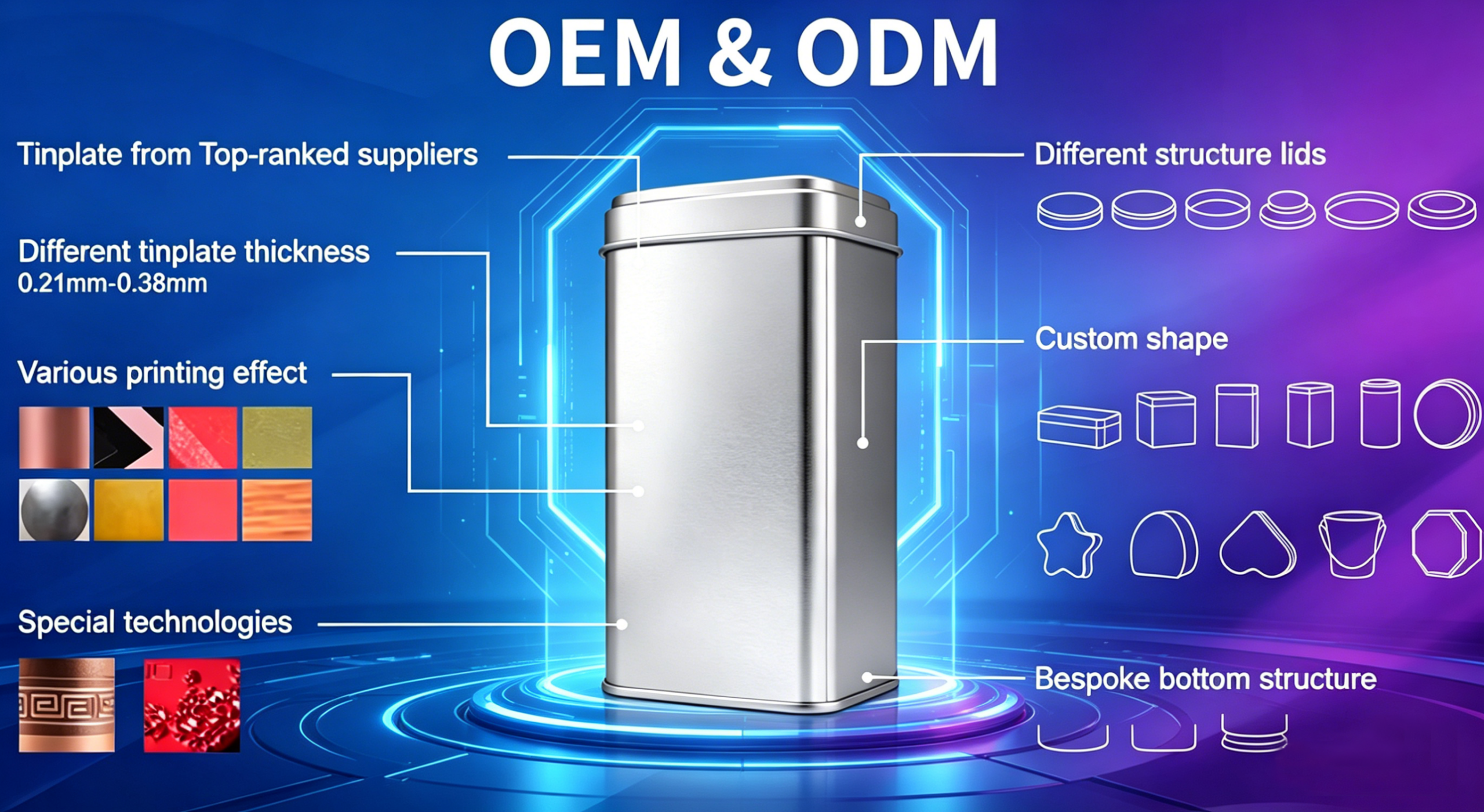
OEM & ODM Service
1. What Is Tinplate? Definition and Composition
Tinplate is a versatile composite material consisting of low-carbon cold-rolled steel sheet coated with a thin layer of tin on both surfaces. The steel core provides exceptional mechanical strength, rigidity, and formability, while the tin layer delivers corrosion resistance, a non-toxic food-contact surface, and an attractive bright finish. A typical tin coating thickness is less than 0.1 mm — yet it makes all the difference in packaging performance. A 2023 materials characterization study confirmed the superior protective qualities of tin-plated steel as a global standard for modern manufacturing.
Tinplate is produced in two primary forms: electrolytic tinplate (ETP) , which accounts for the vast majority of modern production, and the older hot-dip tinning method. In ETP manufacturing, continuous steel strip passes through electrolytic cleaning, pickling, electrolytic tinning, thermal reflowing, and passivation treatment to ensure a uniform, adherent tin coating.
Tinplate is not pure tin — a common misconception. The term “tin can” persists historically, but today’s cans are steel with an ultrathin tin coating. Tin itself is soft and expensive; steel provides strength and formability; combining them in tinplate offers the best of both worlds.
2. Tinplate vs. Tin-Free Steel (TFS): Key Differences
Not all steel packaging is tin-coated. Tin-free steel (TFS), also known as Electrolytic Chromium-Coated Steel (ECCS), replaces the tin layer with a mixed coating of chromium and chromium oxide. Understanding the differences is essential for selecting the right material.
The table below summarizes the key comparison:
| Property | Tinplate (ETP) | Tin-Free Steel (TFS / ECCS) |
|---|---|---|
| Coating | Tin (Sn) | Chromium + chromium oxide (Cr + CrOx) |
| Corrosion Resistance | Excellent; sacrificial tin layer protects steel; superior for acids and moisture | Excellent against sulfur-based corrosion; slightly inferior if scratched |
| Direct Food Contact | Safe; can be used without internal lacquer for many foods | Requires internal lacquer; not suitable for direct food contact without coating |
| Weldability | Suitable for electric welding — ideal for three-piece cans | Not suitable for electric welding; limits use to can ends, closures, and two-piece drawn cans |
| Printability | Direct printing possible; bright, glossy finish supports high-quality graphics | Requires primer or lacquer before printing; matte silver appearance |
| Cost | Moderate — typically 15–25% higher due to tin coating | More cost-effective; ideal for large-volume applications |
| Common Applications | Food cans, beverage cans, decorative tins, aerosol cans, premium packaging | Can ends, easy-open ends (EOE), paint cans, chemical containers, battery jackets |
TFS emerged in response to rising tin prices and concerns over tin supply depletion. For many non-food applications, TFS provides a cost-effective alternative with similar mechanical properties. However, for food-grade packaging requiring direct food contact, superior corrosion resistance against acidic products, or weldability for three-piece can construction, tinplate remains the material of choice.
3. How Are Tinplate Cans Manufactured? Step-by-Step
The manufacturing process transforms tinplate sheet into finished cans through a carefully controlled series of operations.
Stage 1: Raw Material Preparation
The process begins with low-carbon hot-rolled steel sheet. To ensure strength and corrosion resistance, manufacturers select premium-grade steel. Sheets undergo pickling treatment — immersion in hydrochloric or sulfuric acid baths — to remove oxides and surface impurities, producing a smooth surface ready for can-making. This is followed by electrolytic tinning, which applies the protective tin layer through electrodeposition.
Stage 2: Can Body Production
Once tinplate coils are prepared, large sheets are cut into blanks. In three-piece can manufacturing, bodies are rolled into cylindrical shapes, and side seams are sealed using advanced electric welding techniques — a critical advantage of tinplate over TFS. Modern welding ensures hermetic integrity and eliminates the need for lead solders.
Beading (forming concentric rings or ridges on the can body) adds structural strength, allowing the can to withstand internal pressure changes during processing and storage.
Stage 3: Printing and Decoration
Tinplate printing — often called metal decorating — applies custom designs, logos, and nutritional information directly to the flat sheet before can forming. Specialized inks cured at high temperatures ensure durability and adhesion through subsequent manufacturing steps, including bending, stretching, and seaming. For high-end packaging such as biscuit tins, tea boxes, and gift canisters, printed tinplate delivers superior brand presentation unmatched by other materials.
Stage 4: Interior Coating and Assembly
To prevent direct metal-to-product contact and ensure food safety, the interior surface of the can receives a protective organic coating such as epoxy, acrylic, or BPA-free alternatives. These lacquers also shield acidic or sulfur-containing foods from direct tin or steel exposure. Finally, can bodies and ends are assembled via double-seaming — a mechanical interlocking process that creates an airtight closure. Assembly and airtightness validation conclude the process.
4. Why Tinplate Steel Cans Are a Superior Packaging Solution
Tinplate steel cans outperform alternative packaging across multiple dimensions.
4.1 Complete Barrier Protection
Metal provides an essentially impermeable barrier to oxygen, moisture, light, and bacteria — unlike plastics, which allow varying degrees of gas transmission. Tinplate cans block 100% of light penetration, preventing photo-oxidation that degrades food quality. This total barrier performance extends product shelf life significantly while preserving flavor, color, and nutritional value.
4.2 Mechanical Strength and Durability
The steel core of tinplate delivers impressive strength and flexibility. Cans withstand stacking, shipping, handling, and the rigors of high-temperature retort sterilization without deformation. Tinplate’s good ductility allows it to be pressed, rolled, or stamped into complex shapes, meeting diverse packaging needs.
4.3 Corrosion Resistance
The tin layer acts as both a barrier and a sacrificial coating: if the tin layer is scratched, the exposed steel is cathodically protected by the surrounding tin. This makes tinplate exceptionally resistant to rust and corrosion, even in humid environments. Tin’s chemical stability keeps cans rust-free for over a decade, protecting against acids and sulfur compounds that could otherwise cause degradation.
4.4 Non-Toxic and Food-Safe
Tinplate is non-toxic and has been used for food packaging for over a century. The tin coating does not leach harmful chemicals into food contents, unlike some plastic packaging that may release endocrine-disrupting compounds. For consumers concerned about chemical migration, tinplate is a trusted choice.
4.5 Hermetic Sealing
Precision-formed double seams create airtight closures that block air entry and prevent microbial contamination. Once sealed, a tinplate can remains hermetically closed until opened, ensuring product safety throughout distribution and storage.
4.6 Lightweight Advancements
Modern tinplate cans are now up to 30% lighter than older generations — reducing material usage, transport costs, and carbon footprints while maintaining full structural integrity.
5. Tinplate Cans for Food Preservation: Safety and Shelf Life
Food preservation is arguably the most demanding application for any packaging material. Tinplate excels here.
The most critical protective function of a tinplate can is its ability to create a hermetic seal — a complete barrier that prevents recontamination after thermal processing. Canned foods achieve extended shelf life without preservatives. In fact, canned food produced using advanced canning technology can have a shelf life of up to 36 months without any preservatives added.
Tinplate resists corrosion from a wide range of food products — from acidic fruits and tomato products to sulfur-rich proteins such as tuna. The tin layer also contributes to food safety through a well-understood mechanism: trace amounts of tin dissolution can act as an antioxidant, protecting food quality while remaining well within safe consumption limits.
Research on tomato sauce packaged in three-piece tinplate cans demonstrated viability for up to 24 months of storage at elevated temperatures (35°C). For pea preserves in metal packaging with low tin coating, 13 months of storage at ambient temperatures up to 35°C was confirmed feasible.
For brands seeking reliable, long-shelf-life packaging without preservatives, tinplate cans remain the gold standard.
6. Tinplate Steel Strip: The Backbone of Modern Canmaking
Tinplate steel strip is the intermediate product that bridges steel production and finished can manufacturing. It is created by coating a thin sheet of high-quality low-carbon cold-rolled steel with an ultrathin tin layer — usually less than 0.1 mm thick — through advanced processes such as electroplating.
The steel core delivers impressive strength and flexibility, allowing the strip to be formed into various shapes and sizes without cracking. The strong mechanical performance ensures that cans and containers withstand stacking, shipping, and handling. Good ductility means the strip can be pressed, rolled, or stamped into complex forms, meeting the diverse needs of the packaging industry from food cans to aerosol containers.
Tinplate steel strip already accounts for over half of food and beverage packaging worldwide. In addition to cans, it is also used for aerosol containers, electronics housings, household products, and battery casings. This versatility demonstrates why tinplate remains irreplaceable across manufacturing sectors.
7. Sustainability and Recyclability of Tinplate Packaging
Sustainability is no longer optional — it is a competitive necessity. On this front, tinplate steel packaging has few equals.
Record-Breaking Recycling Rates
Steel is infinitely recyclable without loss of quality — a property unmatched in the packaging world. In Europe, 82% of tinplate packaging is recycled — a higher rate than any other packaging material.
Germany set a new global benchmark for sustainable packaging in 2024, with 94.3% of tinplate from private consumption recycled. The recycling rate for total tinplate consumption reached a peak of 92.5%, having remained stable at around 90% since 2006. As Clarissa Odewald, CEO of thyssenkrupp Rasselstein, stated: “Tinplate is one of the leading materials in terms of recyclability and the epitome of true circularity, as it can be recycled almost 100%, over and over again, without any loss of quality”.
A Truly Circular Material
Because steel is magnetic, tinplate is easy to separate from mixed waste streams using electromagnetic separators — unlike many other packaging materials. A tinplate can, twist-off closure, or crown cork can be recycled after use into new high-quality steel products: a wind turbine, a car component, a bicycle part, or even another can. The material cycle is closed.
CO₂-Reduced Tinplate Innovations
Beyond recyclability, the industry is actively reducing the carbon footprint of tinplate production. thyssenkrupp Rasselstein’s bluemint® steel reduces CO₂ emissions by substituting specially processed steel scrap for CO₂-intensive blast furnace raw materials. Henkel has adopted this low-carbon tinplate for multiple product categories including adhesives, achieving measurable improvements in packaging carbon footprints without compromising quality.
The German Packaging Award 2026 recognized a tinplate cartridge made with bluemint® steel that saves up to 69% CO₂ emissions in production through the use of biomethane. With a recycling rate of 85.5% for tin packaging in Europe, even silicone product residues do not prevent material recycling.
When consumers choose tinplate packaging and dispose of it correctly in recycling bins, they actively support the circular economy. Yet consumer awareness remains low: surveys show consumers estimate the recycling rate for tinplate at only 55%, while actual rates exceed 90%. Education and clear labeling are essential to close this perception gap.
8. Global Tinplate Can Market: Size, Growth, and Trends (2025–2031)
The metal can market, of which tinplate is a significant segment, continues to expand globally.
Market Size and Forecast
Global Metal Cans Market : Valued at USD 18 billion in 2024, projected to reach USD 25.6 billion by 2031, growing at a CAGR of 5.60%.
Global Specialty Tin Cans Market : Expected to grow at a CAGR of 4.51% from USD 1.249 billion in 2025 to USD 1.557 billion in 2030.
United States Steel and Tin Cans Market : Valued at USD 3.21 billion in 2025, projected to reach USD 4.44 billion by 2035 at a CAGR of 3.30%.
Key Market Drivers
Sustainability and Regulatory Support: Growing environmental awareness and stringent regulations on single-use plastics are key drivers. The European Union’s policies to reduce plastic waste have accelerated the adoption of metal packaging globally. With a global recycling rate of approximately 70% for tin cans, they remain a preferred sustainable alternative.
Growth in the Food and Beverage Sector: The global food and beverage industry is projected to reach USD 4.5 trillion by 2027, significantly driving demand for canned shelf-stable products including fruits, vegetables, and beverages. Urbanization and the rising popularity of convenient foods have led to a 4% increase in global canned food exports. Tinplate’s ability to preserve product quality makes it ideal for these applications.
Technological Innovations: BPA-free linings and advanced laser-activated pigment printing introduced in recent years enhance both functionality and sustainability, reducing waste, improving recyclability, and catering to premium branding needs in the beverage and cosmetics sectors.
Regional Leaders: Asia Pacific dominates the specialty tin cans market, accounting for over 40% of global demand in 2024, driven by rapid industrialization, urbanization, and a growing middle class. China leads with increased canned beverage consumption, while India’s market expands due to rising disposable incomes.
9. Key Industries Using Tinplate Steel Cans
Tinplate’s versatility spans multiple sectors:
Food and Beverages — Processed vegetables, soups, tuna, fruits, sauces, pet food, coffee, tea, spices, powdered milk, and ready-to-eat meals. Tinplate provides the complete barrier and corrosion resistance that fresh preserves demand.
Aerosol Packaging — Deodorants, hair sprays, paints, lubricants, household cleaners, and insecticides. Strength and pressure resistance make tinplate the material of choice for pressurized contents.
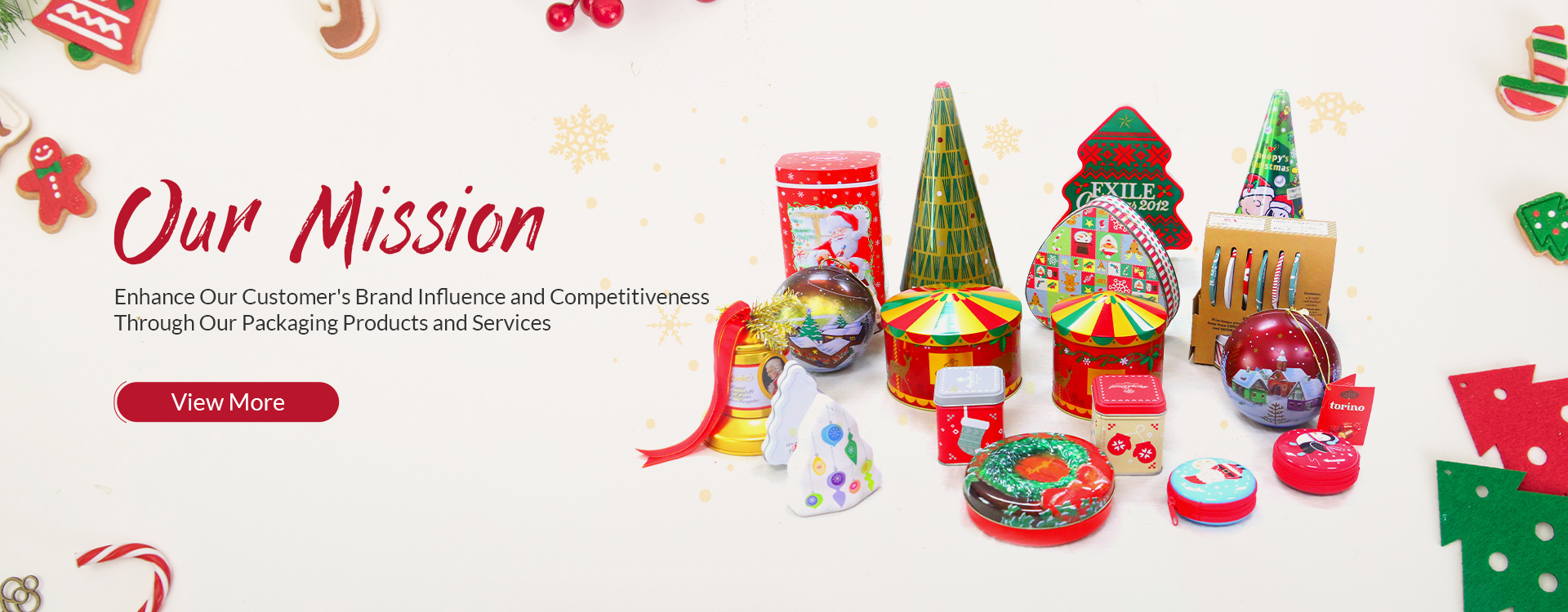
Decorative and Gift Packaging — Biscuit tins, chocolate boxes, tea canisters, cosmetic jars, and promotional containers. Printed tinplate’s bright finish and high-quality graphics appeal to premium brands.
Industrial and Chemical Packaging — Paints, coatings, adhesives, solvents, lubricants, and hazardous goods. Tinplate resists corrosion from aggressive chemicals and withstands rough handling in industrial environments.
Pharmaceutical and Nutraceutical — Pill containers, medicinal syrups, protein powders, and nutritional supplements. Non-toxic and airtight, tinplate maintains product purity and potency.
Battery Casings and Electronics — Alkaline batteries, lithium primary cells, and electronic shielding components exploit tinplate’s electrical conductivity and formability.
10. Frequently Asked Questions (FAQ)
Q1: Are tin cans actually made of pure tin?
No. Modern “tin cans” are made of low-carbon steel with a very thin electrolytic tin coating (typically less than 0.1 mm). The steel provides strength; the tin prevents rust and enables food contact.
Q2: Is tinplate food-safe?
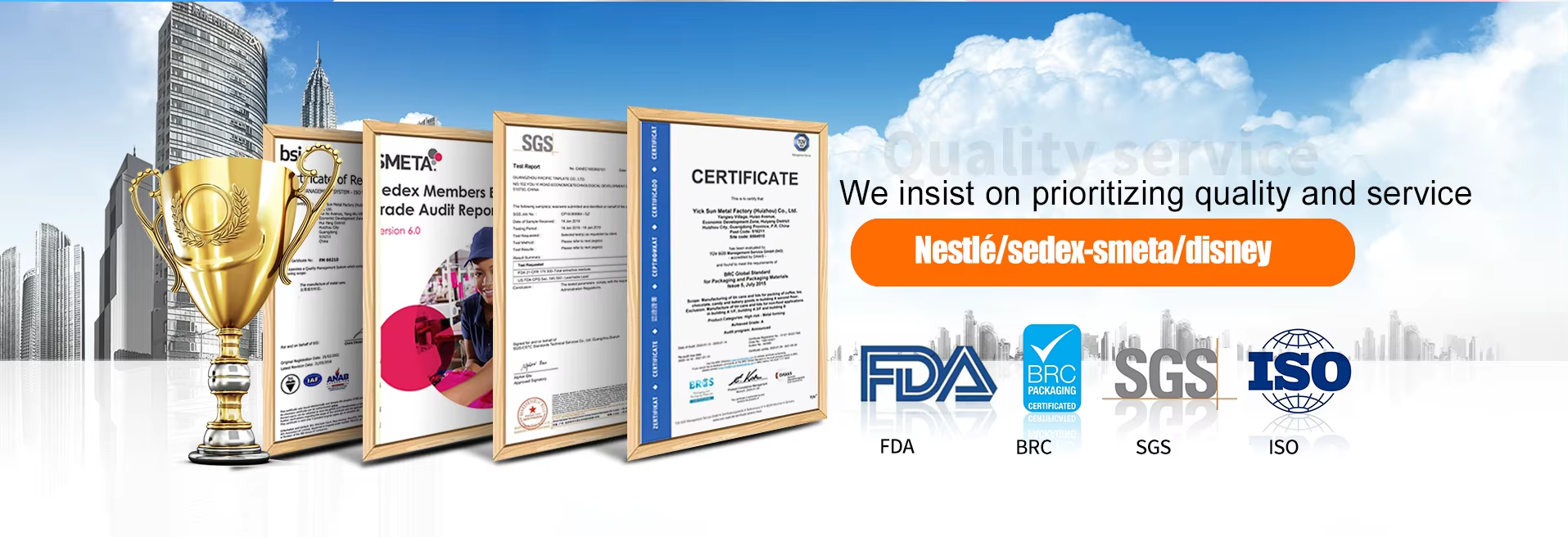
Yes. Tinplate has been used for food packaging for over 100 years and is approved for direct food contact by regulators worldwide including the FDA and EFSA. For highly acidic or sulfur-rich foods, internal lacquers add extra protection.
Q3: Can tinplate cans be recycled?
Absolutely. Steel is infinitely recyclable without quality loss. In Europe, the tinplate recycling rate exceeds 80%. In Germany, it is over 90%. Always dispose of empty cans in recycling bins. Due to the magnetic properties of steel, tinplate cans are easy to sort and recycle.
Q4: What is the difference between tinplate and tin-free steel (TFS)?
Tinplate uses a tin coating on steel; TFS uses chromium/chromium oxide. Tinplate is weldable and suitable for direct food contact; TFS requires lacquers and is used for can ends, paint cans, and chemical packaging. Tinplate generally costs 15–25% more due to higher raw material costs.
Q5: How long can food last in tinplate cans?
Properly canned and sealed food can last 2 to 5 years or more — up to 36 months even without preservatives. Actual shelf life depends on the food type, processing method, and storage conditions.
Q6: Are tinplate BPA-free cans available?
Yes. BPA-free epoxy linings and alternative coating chemistries such as acrylic, polyester, and oleoresin are widely available. The industry is actively transitioning to BPA-free solutions in response to consumer demand and regulatory requirements.
Q7: Are tinplate cans more expensive than plastic or aluminum?
Raw material costs for tinplate are typically higher than plastic and somewhat higher than aluminum for beverage applications. However, when total lifecycle costs including product protection, shelf life extension, and recyclability are considered, tinplate is often more cost-effective.
Q8: What is bluemint® steel, and how does it reduce CO₂?
bluemint® steel is a low-carbon tinplate produced by substituting specially processed steel scrap for CO₂-intensive blast furnace raw materials. It reduces CO₂ emissions by up to 69% in production compared to conventional tinplate, with externally verified and DNV-certified emission figures.
Conclusion: Why Tinplate Steel Cans Remain Irreplaceable in 2026 and Beyond
Tinplate steel cans are not a legacy packaging material — they are a contemporary solution that addresses the most urgent challenges facing the packaging industry: sustainability, product protection, food safety, and cost-effectiveness. With recycling rates exceeding 90% in leading markets, infinite recyclability without quality loss, proven innovations in CO₂-reduced production, and global market growth of 4–5% annually, tinplate cans have a strong future.
For packaging buyers, brand managers, and sustainability professionals, tinplate stands as one of the most responsible and reliable choices available.
Key takeaways for decision-makers:
Tinplate offers total barrier protection essential for long shelf life without preservatives
Steel’s infinite recyclability and over 90% recycling rates make tinplate the most circular packaging option
Modern low-carbon tinplate reduces CO₂ footprints by up to 69% through bluemint® steel
Tinplate vs. TFS decisions should consider weldability, food contact requirements, and coating adhesion
Global demand for tinplate cans is rising, driven by sustainability regulations and consumer preference for metal over plastic
Next steps for your business:
✔ Evaluate your product’s chemical compatibility with tinplate vs. TFS offerings
✔ Request recycled content and CO₂ footprint data from your tinplate supplier
✔ Design for recyclability by avoiding mixed-material constructions
✔ Educate consumers on proper disposal to achieve high recycling return rates
The tinplate steel can — strong, safe, sustainable, and infinitely recyclable — is ready for the next century of packaging.
*This guide was updated in May 2026. All market data, recycling statistics, and technical information are based on industry reports, peer-reviewed studies, and manufacturer publications available as of the date of writing. Always verify with official sources for specific applications and regional regulations.*
Target Keywords (Integrated Naturally)
tinplate steel cans, electrolytic tinplate ETP, tin free steel TFS comparison, tinplate can manufacturing process, benefits of tinplate packaging, tin cans for food preservation, recyclability of steel cans, sustainable metal packaging, printed tinplate sheets, bluemint steel CO2 reduction, global metal cans market 2026, tinplate vs aluminum packaging, airtight sealing tinplate, tinplate food safety FDA, how are tin cans made
Suggested Internal/External Links (for website integration)
Internal: “How to Choose the Right Coating for Tinplate Food Cans”
Internal: “Tinplate vs Aluminum: A Complete Comparison for Beverage Brands”
External: thyssenkrupp Rasselstein sustainability page (authority link)
External: European Metal Packaging (EMPAC) recycling data
External: FDA Food Contact Substance notifications for tinplate